Safest Sleep Medication for Elderly Patients: A Clear Guide for Families and Caregivers
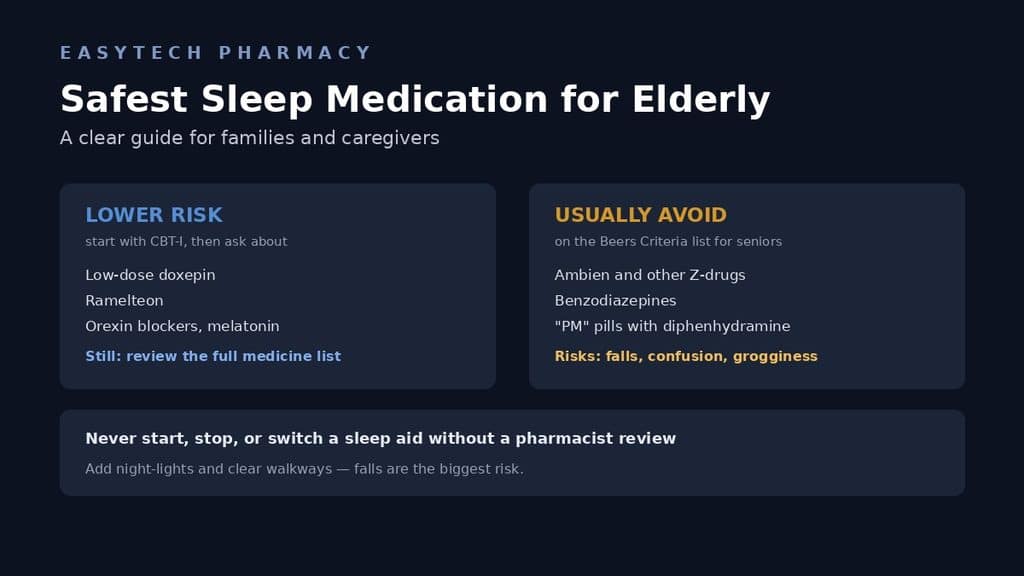
If you’re searching for the safest sleep medication for elderly parents or patients, you’re asking the right question. Sleep aids affect older bodies differently. A pill that feels harmless at 40 can raise the risk of falls, confusion, or next-day grogginess at 75.
This guide ranks common sleep medicines by safety for older adults. You’ll see which options carry less risk, which ones need caution, and which ones experts say to avoid. You’ll also get a simple checklist for families and caregivers.
Why Sleep Medication for Elderly Adults Needs Extra Care
As we age, our bodies change the way they handle medicines. Here’s what shifts:
- Slower clearance: the liver and kidneys clear drugs more slowly, so effects last longer
- More sensitivity: the aging brain reacts more strongly to calming medicines
- More medicines overall: many older adults take several pills, which raises the risk of interactions
- Higher fall risk: drowsiness, dizziness, and night-time bathroom trips add up
Falls are a serious concern. The CDC’s STEADI program lists certain medicines, including sleep aids, among the key fall risks for older adults. Our guide on fall risk in older adults explains more.
Is There One Safest Sleeping Pill for Older Adults?
Honestly, no single pill wins for everyone. The best choice depends on the type of sleep problem, other health conditions, and the full medicine list.
That said, sleep experts agree on one point. For most older adults, the safest first step isn’t a pill at all. It’s Cognitive Behavioral Therapy for Insomnia, or CBT-I. It works well at any age and carries no risk of falls or dependence.
The Beers Criteria: A Trusted Guide to Sleep Aids for Seniors
Pharmacists and care teams across the US use a tool called the Beers Criteria. The American Geriatrics Society updates this list of medicines that older adults should usually avoid or use with care. Several common sleep aids appear on it.
We used this list, along with FDA safety notices, to sort the options below.
Lower-Risk Sleep Medicine for Older Adults
These options generally carry fewer risks for seniors. Still, “lower risk” doesn’t mean “no risk.” Each one needs a careful review of the full medicine list.
Low-Dose Doxepin
At very low doses, doxepin helps people stay asleep. Research in older adults shows a good safety record at these small doses. Higher doses, however, act differently and carry more side effects. Learn more in our doxepin vs Ambien comparison.
Ramelteon
Ramelteon works on the brain’s melatonin system. It helps people fall asleep and shows little risk of dependence or next-day grogginess. It works best for trouble falling asleep, not for waking at night. Read our ramelteon vs Ambien guide.
Orexin Blockers
This newer group includes Belsomra, Dayvigo, and Quviviq. They quiet the brain’s “stay awake” signal instead of sedating the whole brain. Studies have included older adults, though next-day drowsiness can still occur. Compare them in Belsomra vs Ambien and Dayvigo vs Ambien.
Melatonin
Melatonin is a mild, over-the-counter option. It may help with body clock problems, which are common in older adults. However, product quality varies, so choose a brand with a USP Verified seal.
Sleep Aids for Seniors That Need Caution
Trazodone
Many people use this antidepressant off-label for sleep. In older adults, it can cause dizziness and a drop in blood pressure when standing up. That raises fall risk. See our trazodone vs Ambien guide.
Gabapentin
Some people use gabapentin when pain and poor sleep go together. Yet it can cause dizziness and unsteady walking, especially in seniors with kidney changes.
Sleep Medication Older Adults Should Usually Avoid
Ambien and Other “Z-Drugs”
Zolpidem (Ambien), eszopiclone (Lunesta), and zaleplon (Sonata) appear on the Beers Criteria list to avoid in older adults. The list links them to falls, fractures, confusion, and emergency visits. The FDA also added a boxed warning about complex sleep behaviors, such as sleepwalking. Our posts on Ambien black box warning explain the details.
Benzodiazepines
Medicines like temazepam, lorazepam, and diazepam can stay in older bodies for a long time. As a result, they raise the risk of falls, memory problems, and dependence.
“PM” Pills and Drowsy Antihistamines
Diphenhydramine and doxylamine sit in many “PM” and nighttime products. They can cause confusion, constipation, trouble urinating, and dry mouth in seniors. Many families don’t realize these common store-bought aids are on the avoid list. Our Ambien vs Benadryl post explains why.
Antipsychotics for Sleep
Some people receive low-dose antipsychotics, such as quetiapine, just for sleep. Experts advise against this use in older adults because of serious risks.
Quick Ranking: Safest Sleep Medication for Elderly Adults
- Start here: CBT-I and healthy sleep habits
- Lower risk: low-dose doxepin, ramelteon, orexin blockers, melatonin
- Use with caution: trazodone, gabapentin
- Usually avoid: Z-drugs, benzodiazepines, “PM” antihistamines, antipsychotics for sleep
Caregiver Checklist for Sleep Medicine for Older Adults
- Make a full medicine list. Include OTC products, vitamins, and “PM” pills.
- Look for hidden sleep blockers. Some daytime medicines keep seniors awake. Our guide on what medications keep you awake helps.
- Ask for a medicine review. Pharmacists can flag Beers Criteria drugs in minutes.
- Make the home safer. Add night-lights, clear walkways, and grab bars in the bathroom.
- Watch the next morning. Note any confusion, unsteady walking, or grogginess.
- Never stop a sleep aid suddenly. A slow taper avoids rebound insomnia.
Warning Signs With Sleep Aids for Seniors
- A fall or near-fall, especially at night
- New confusion or memory trouble
- Sleepwalking or other unusual night-time behavior
- Heavy drowsiness during the day
- Trouble breathing or very slow breathing during sleep
FAQs: Safest Sleep Medication for Elderly Patients
What is the safest sleep aid for an 80-year-old?
For most people that age, CBT-I comes first. If a medicine helps, lower-risk options like low-dose doxepin or ramelteon often come up. The right choice depends on the person’s health and other medicines.
Is Ambien safe for seniors?
Ambien appears on the Beers Criteria list of medicines older adults should usually avoid. It raises the risk of falls and confusion.
Is melatonin safe for older adults?
Melatonin is generally mild. Still, check it with a pharmacist, since it can interact with some medicines.
Why should seniors avoid Benadryl for sleep?
Diphenhydramine can cause confusion, constipation, and urinary trouble in older adults. Over time, it may also affect memory.
Can older adults take sleep aids long term?
Most experts prefer short-term use, with regular reviews. Long-term plans usually focus on CBT-I and healthy routines.
Bottom Line — Safety First, Pills Second
The safest sleep medication for elderly adults is often no medication at all. CBT-I and healthy habits come first. When a medicine helps, lower-risk options exist, while Z-drugs, benzodiazepines, and “PM” pills usually belong on the avoid list. Bring the full medicine list to your pharmacist, and review it often.
If a sleep aid becomes part of the plan, our Ambien near me guide shows how to find a local pharmacy and compare prices.